AI agency · Report automation
A construction daily report app that runs on WhatsApp: Jask Reporter
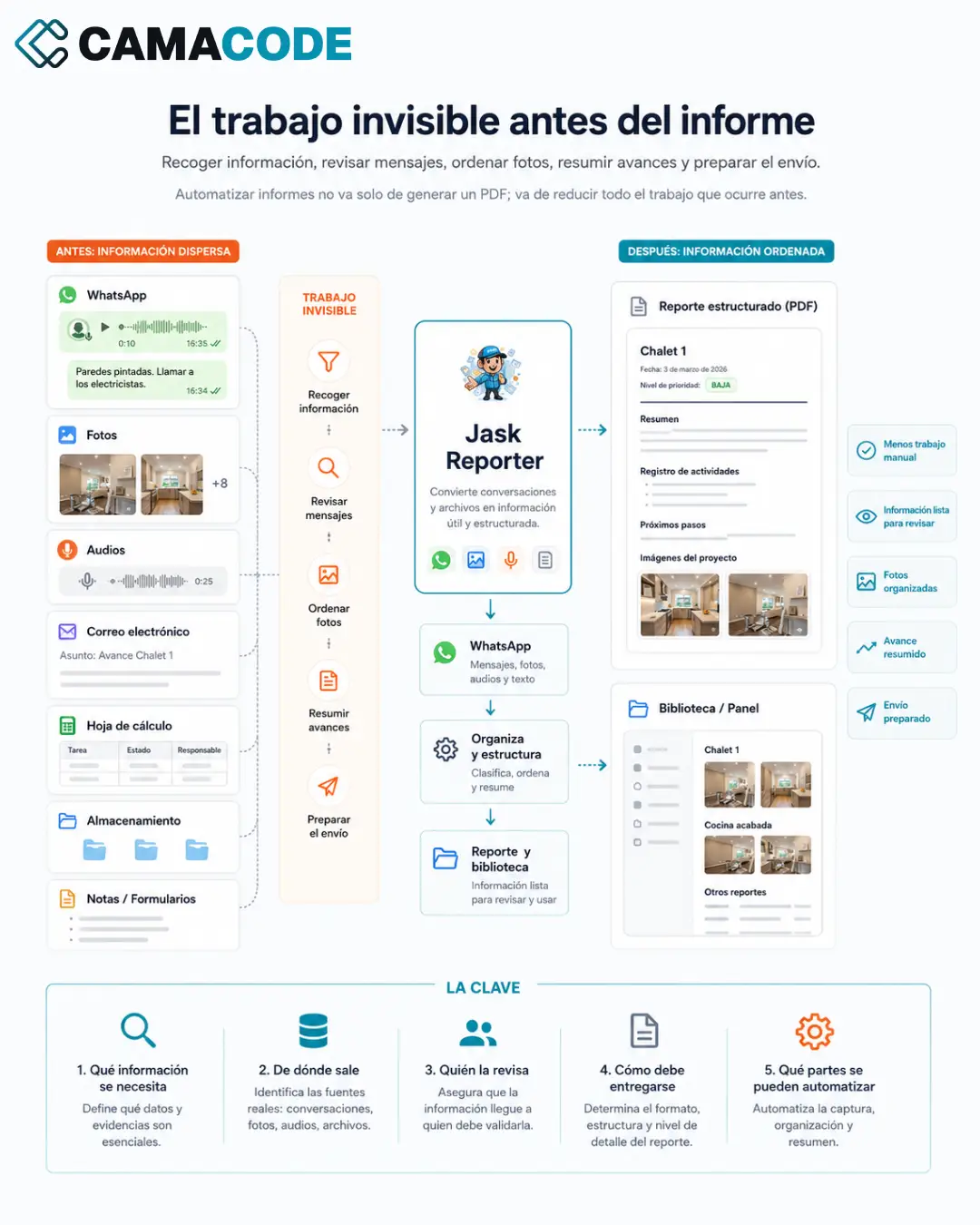
Jask Reporter, built by the Camacode team, is a construction daily report app that runs on WhatsApp: it turns the messages site crews already send (progress updates, issues, photos and voice notes) into structured daily reports. The day's informal information becomes clear reporting for tracking, coordination and record-keeping, without changing the tools people already use.

Written by Lluís Casals Marsol · Founder at Camacode
Published on
- Industry:
- Construction and refurbishment
- Solution type:
- In-house product: AI construction daily reports over WhatsApp
- Services:
- AI agency
The problem
A lot happens on a construction site every day: progress, surprises, decisions, visits, materials that arrive or fail to arrive. The problem is that documenting it properly takes time, and it often gets done late and from memory, with the information scattered across phone photos, loose notes, calls and messages. The daily report ends up being the last job of the day (when nobody has the energy left) and project tracking suffers: whatever is not documented on time gets argued about later.
The context
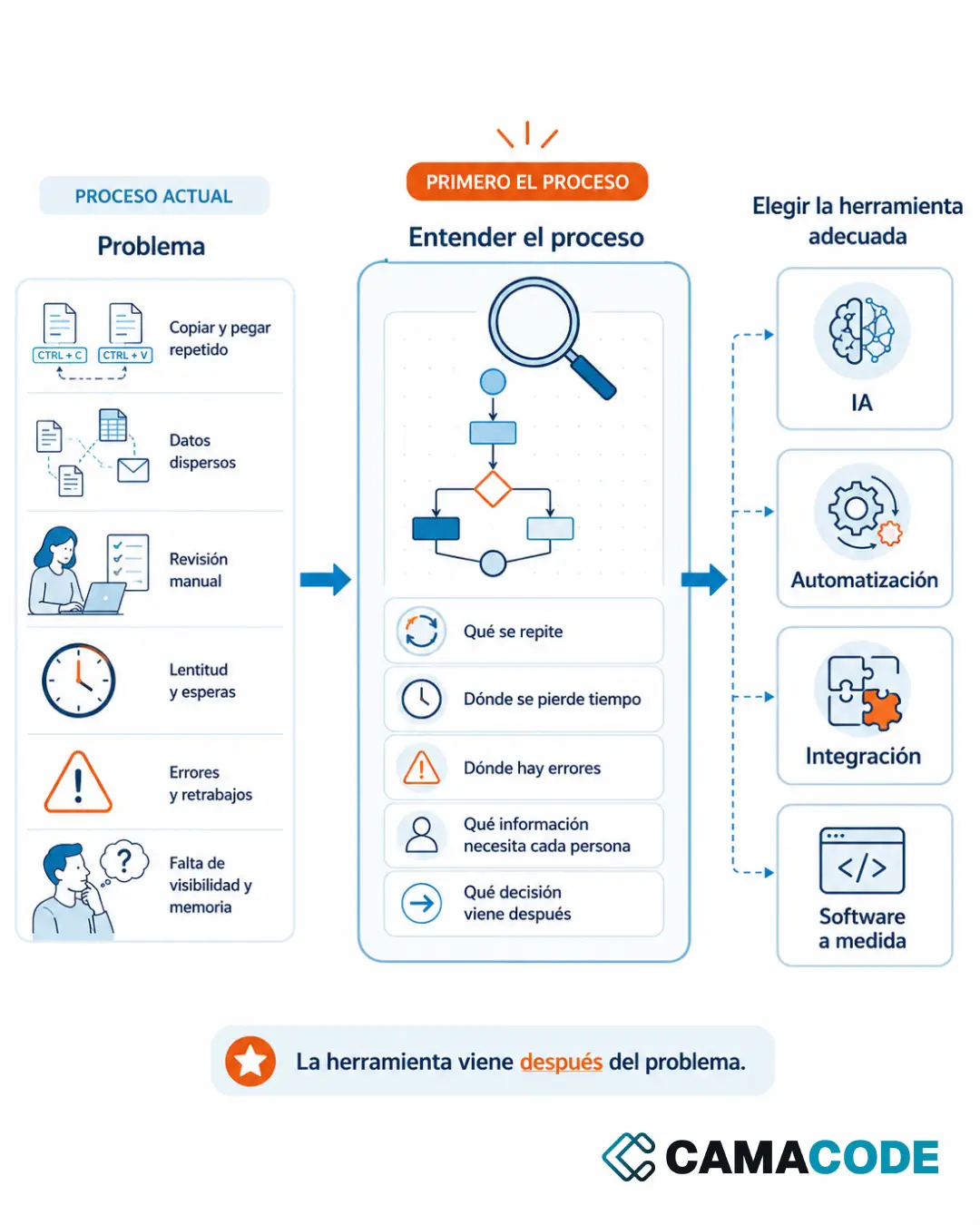
Before founding Camacode we built Jask Reporter as our own product, precisely because this problem came up on every site: the information exists, but it lives in conversation format. The idea was simple and slightly counterintuitive: instead of asking the crew to use yet another app, use the one everyone already has. In our screenshots and demos we always use fictional information; we never publish client data or real site data.
The solution: a construction daily report app on WhatsApp
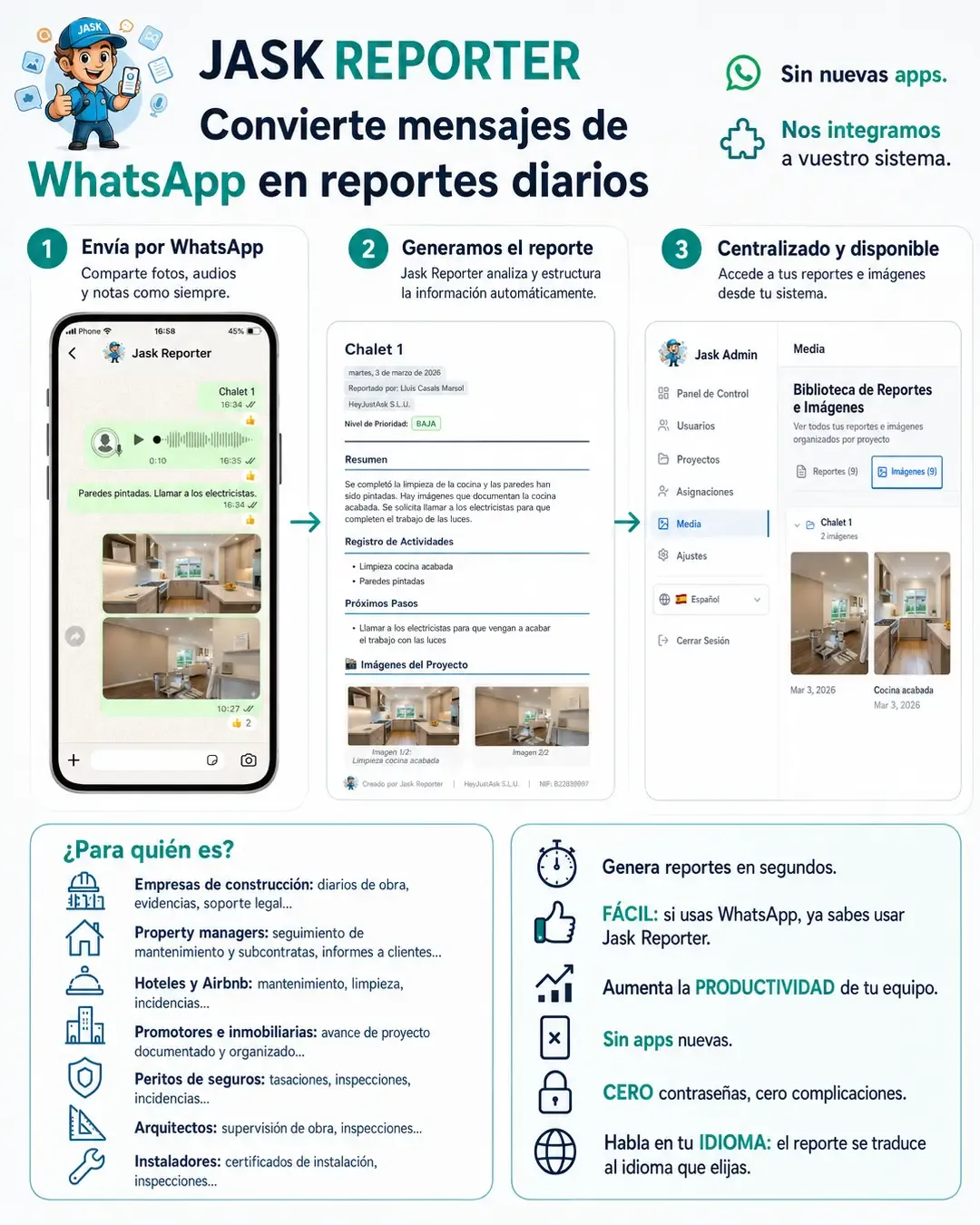
Jask Reporter lets the site crew send over WhatsApp exactly what they send today: text messages, photos of the progress, voice notes describing an issue. The system receives all of it, interprets it with AI, organizes it by site and by date, and turns it into structured daily reports: what was done, what issues came up, what photographic evidence backs it. The site manager or the technical office gets a clear report without chasing anyone, and the field crew documents without stopping work.
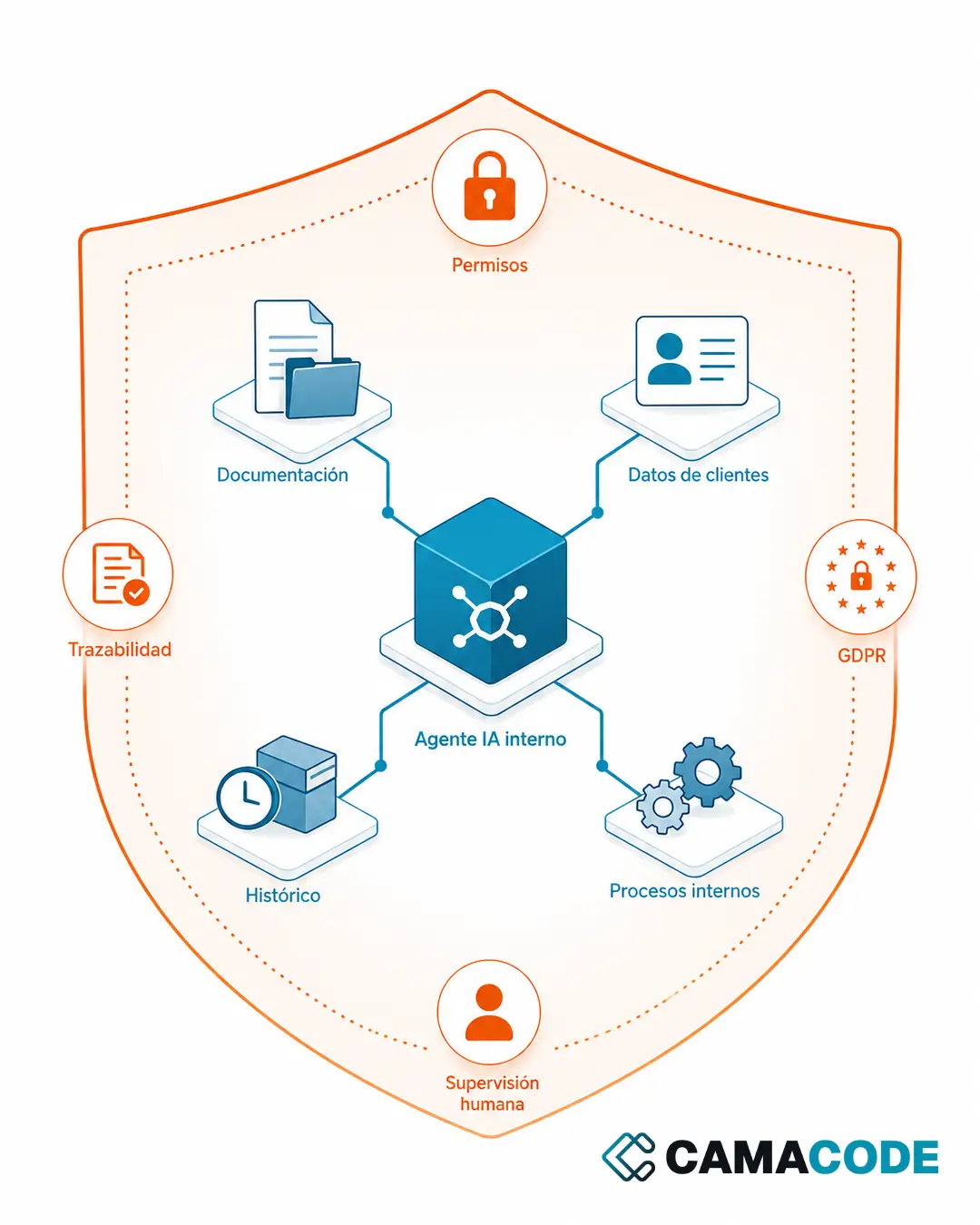
It is worth being precise about how that information gets in, because it is the first question from anyone who has tried something similar: nobody’s personal WhatsApp is read, and no unofficial workaround is involved. The system runs on the WhatsApp Business API, Meta’s official channel: the site messages a company number, the same way it would message a supplier, and only what is sent to that number reaches the system. Any other route (extensions that read the app, simulated sessions) breaks the platform’s terms of use and is fragile by design.
How the construction daily log app works
- Sent over WhatsApp, as always: text, photos and audio; no new app to learn and no forms to fill in on site.
- AI interprets and organizes: every message is linked to its site and classified as progress, issue or note.
- Voice notes become text: what someone explains in a 30-second audio ends up written and structured.
- Photos are documented in context: each image sits alongside the progress or issue it illustrates, with its date.
- Structured, searchable reports: daily reports and summaries ready for tracking, coordination and client record-keeping.
- A complete site history: everything reported is recorded and findable, not buried in a chat thread.
One boundary is worth stating plainly: these reports are there for tracking and for communicating progress with dated evidence, and they hold up as a record between the site and the client. They are not, and do not pretend to be, the official documentation of the works: the order and attendance book, the incident book and the rest of the paperwork each project is legally required to keep. Jask Reporter complements that documentation; it does not stand in for it.
Results
The main change is that documenting stops competing with working. The field crew reports in the moment, in the format that feels natural to them, and the project still gets structured daily reports and a complete history. Less office time reconstructing the day, fewer arguments about what happened and when, and a better record of the work done. This project also reflects the way we work at Camacode today: understand how the team actually works and design the technology around that flow, not the other way around. You can see the product at jaskreporter.com.
Do you have a similar process?
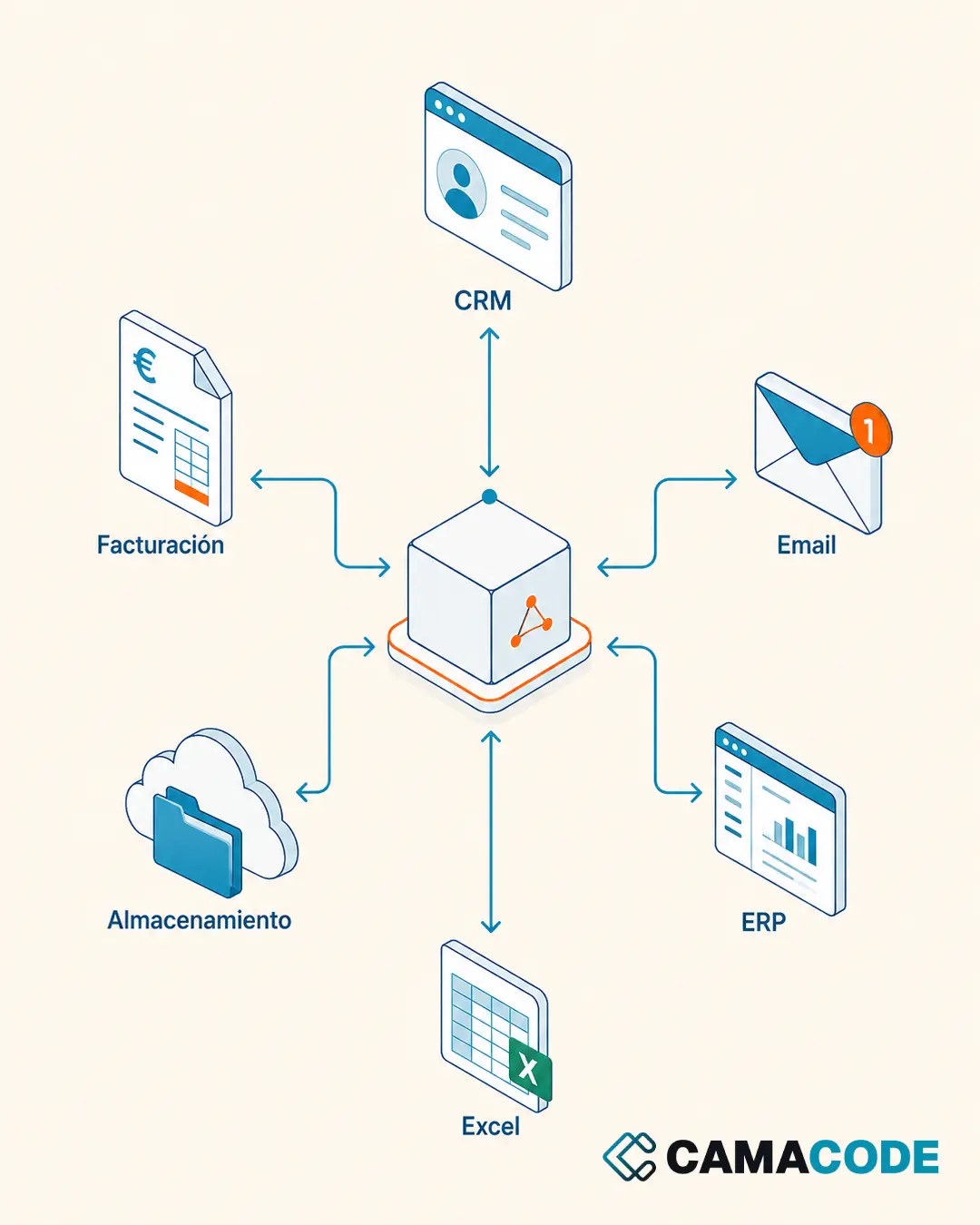
This pattern (turning informal information into structured reporting) is not exclusive to construction: it applies to maintenance, installations, inspections, field services or any team that works away from the office and has to report. You do not always need to change the tools; sometimes it is enough to connect what people already use with the output you actually need. We cover more in how to automate reports without replacing your whole system and what processes can be automated in a company.
Does your team spend part of every day reconstructing what was already said over WhatsApp? Tell us how you produce your reports today and we will see whether it can be simplified using the tools you already have.