Custom software · Partner portal
Investor portal software for a real estate investment partnership
Camacode built custom investor portal software for a partnership developing a residential project in the Balearic Islands. Every partner checks their holding, payments, capital calls, documents and votes in one place, while the administrators keep all information centralized: fewer doubts, fewer crossed wires and less manual work.

Written by Lluís Casals Marsol · Founder at Camacode
Published on
- Industry:
- Real estate investment (Balearic Islands)
- Solution type:
- Private investor portal · custom software
- Services:
- Custom software development
The problem
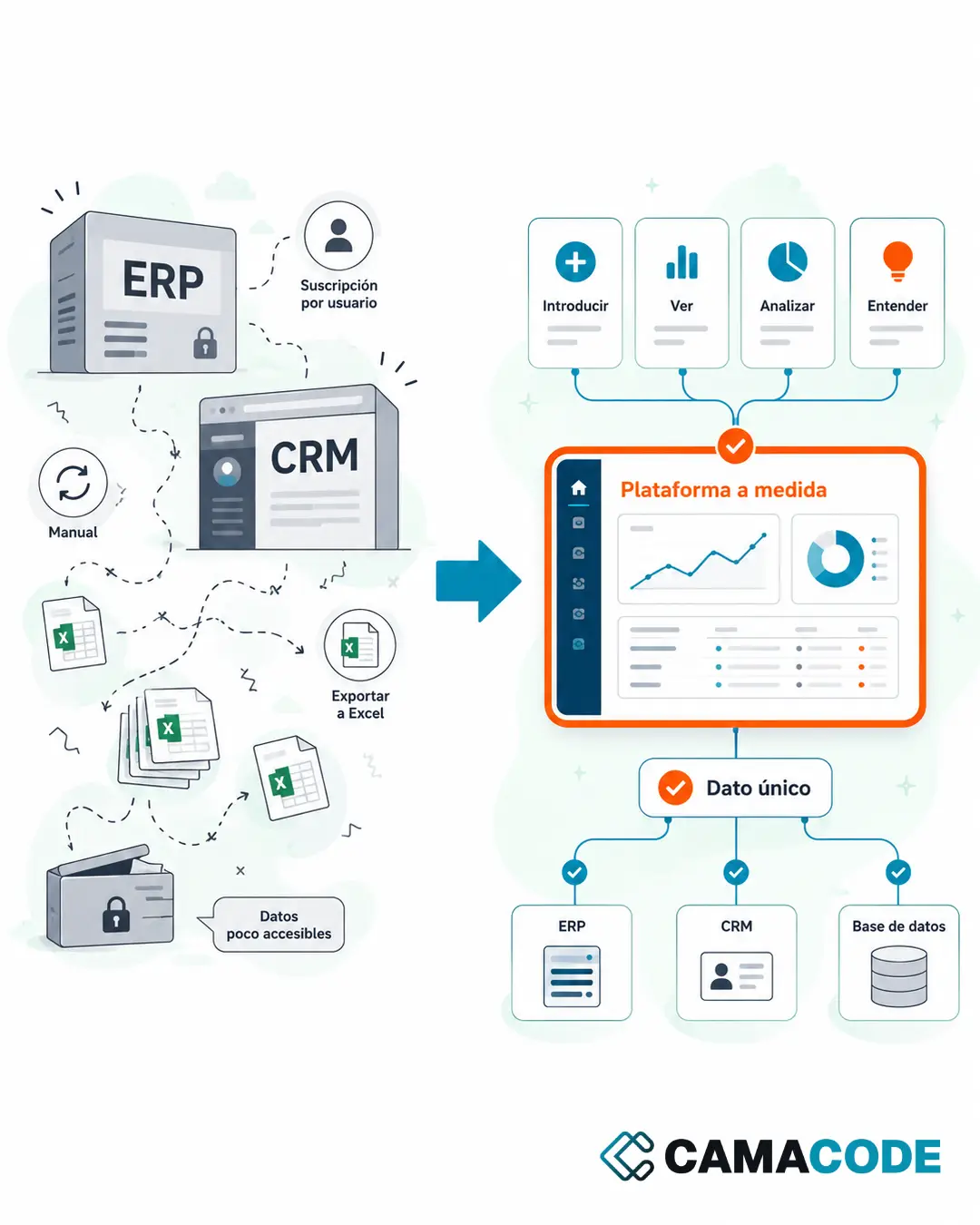
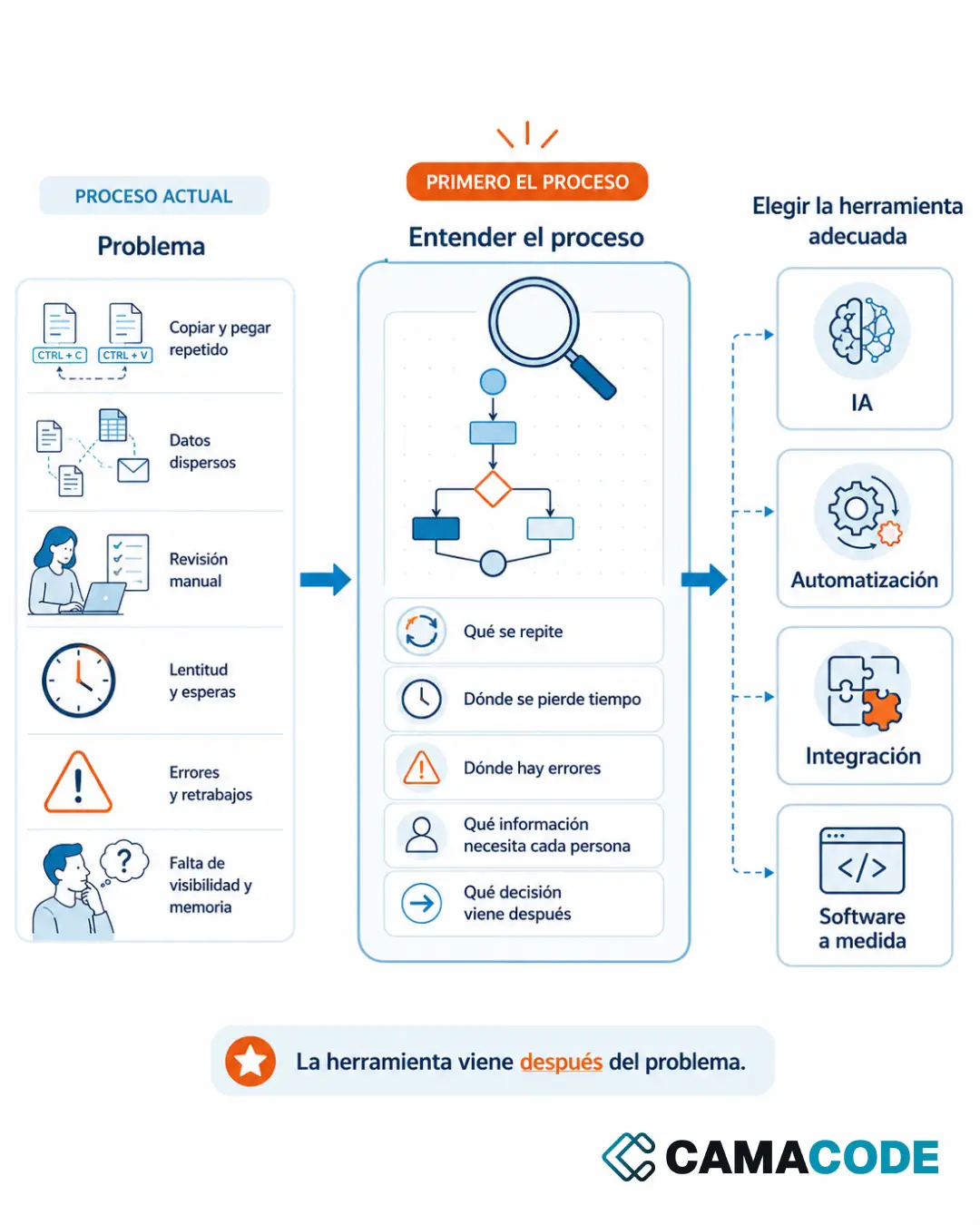
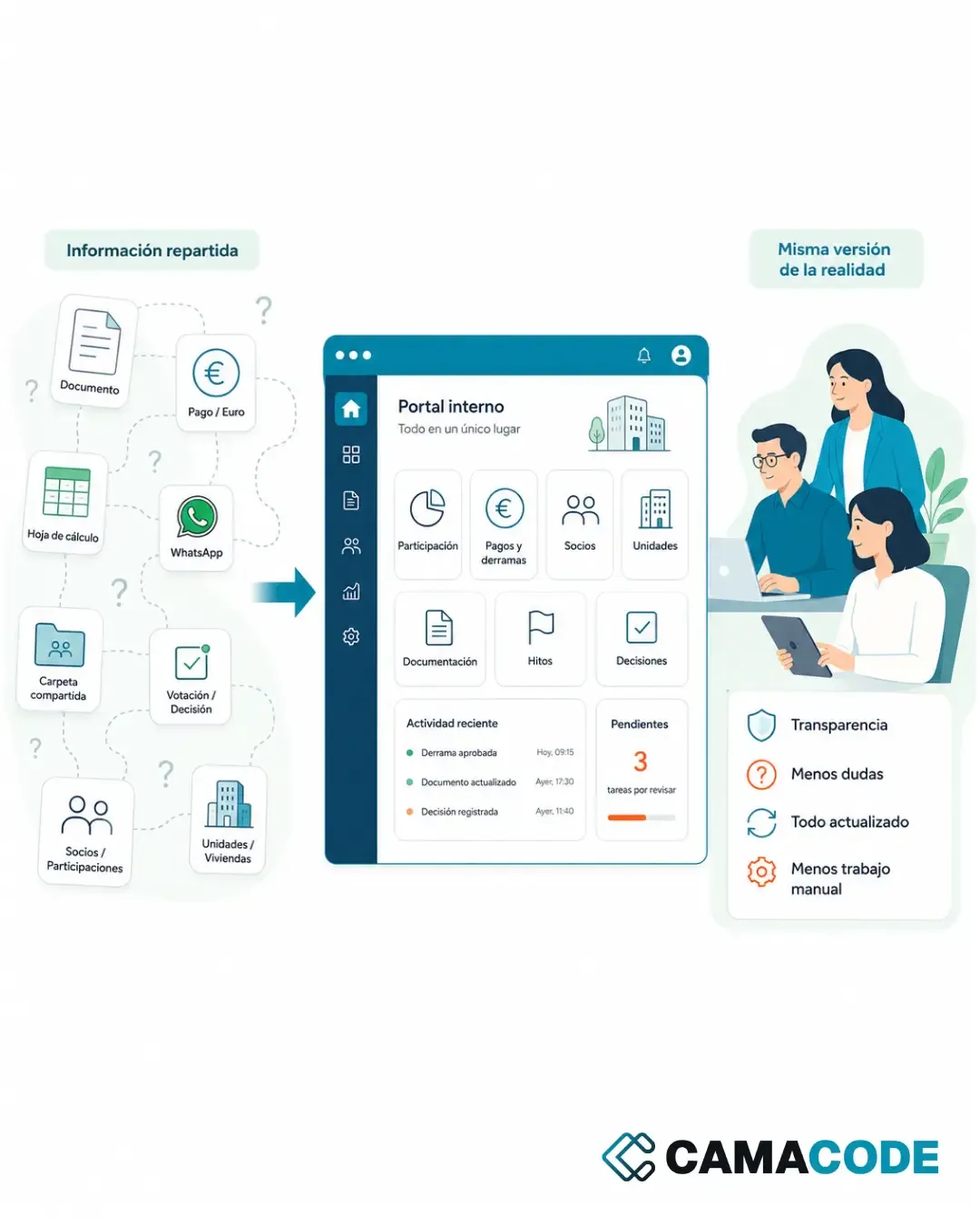
Information was spread across too many places: documents in shared folders, payments in spreadsheets, decisions buried in email threads and WhatsApp groups. When a partner wanted to know how much they had contributed, which capital call was still outstanding or what had been voted on at the last meeting, the answer depended on someone digging out the data and forwarding it. And when a project depends on several people who have put in their own money, that “I’ll check and get back to you” creates doubts that no meeting fully resolves.
The context
An investment partnership was developing a residential building in the Balearic Islands. Several partners, different contributions, units still to be allocated, construction milestones, periodic capital calls and decisions that had to be documented. None of this is unusual: it is the everyday management of any shared project. What was clear was that Excel, WhatsApp and shared folders had fallen short, and finding the right information took far too long. (All the data shown in the screenshots is fictitious: we never publish real names, amounts or documents.)
The solution: custom real estate investor portal software
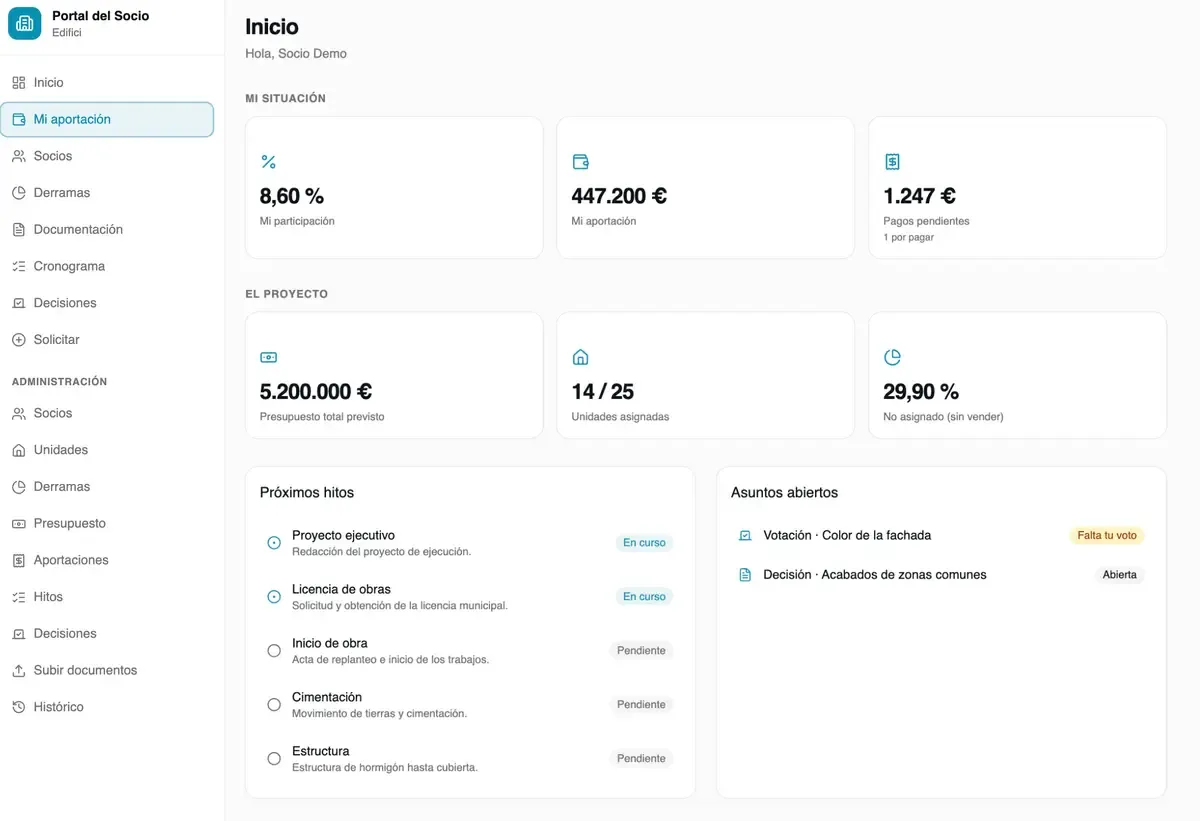
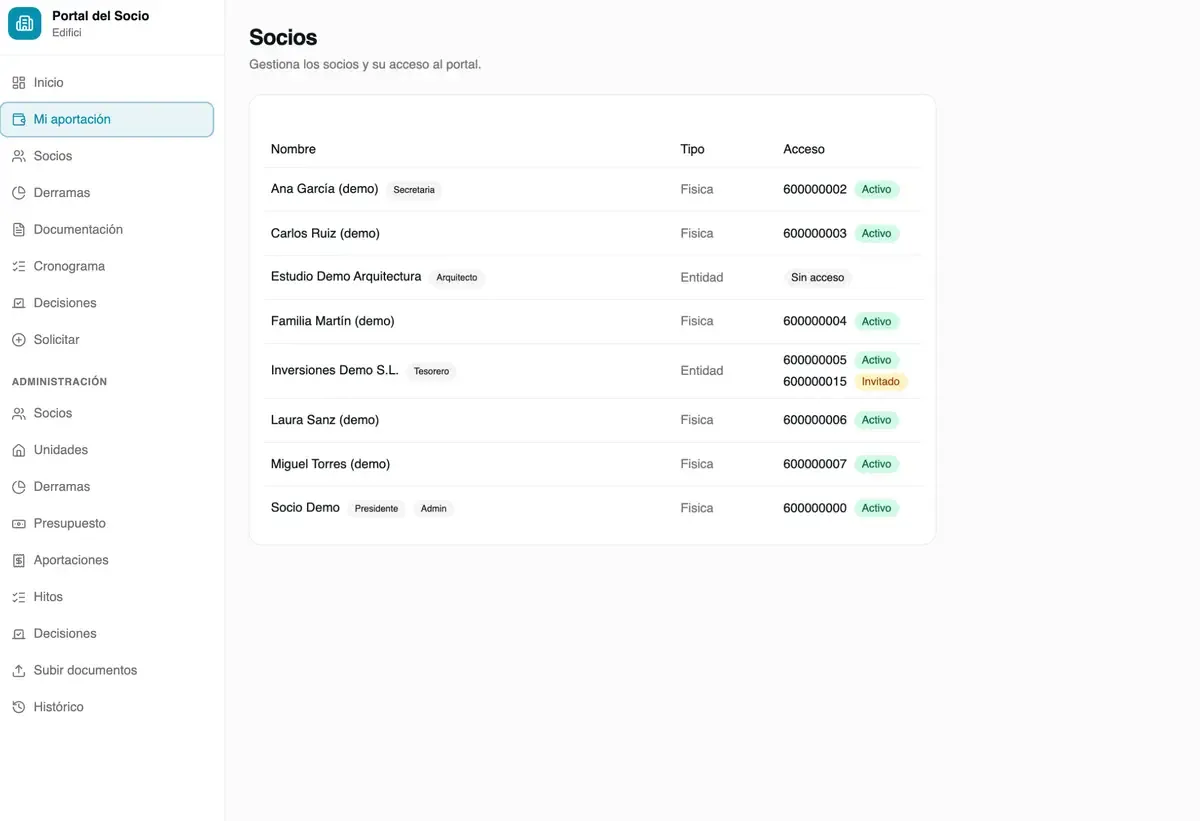
We built a private investor portal: real estate investor portal software where each person logs in and sees exactly what applies to them. The administrators manage everything from a single panel, without duplicating information in spreadsheets or answering the same questions over and over. It is not an ERP or a generic product bent into shape: it is investor portal software designed around how this particular partnership actually works.
What the investor portal includes
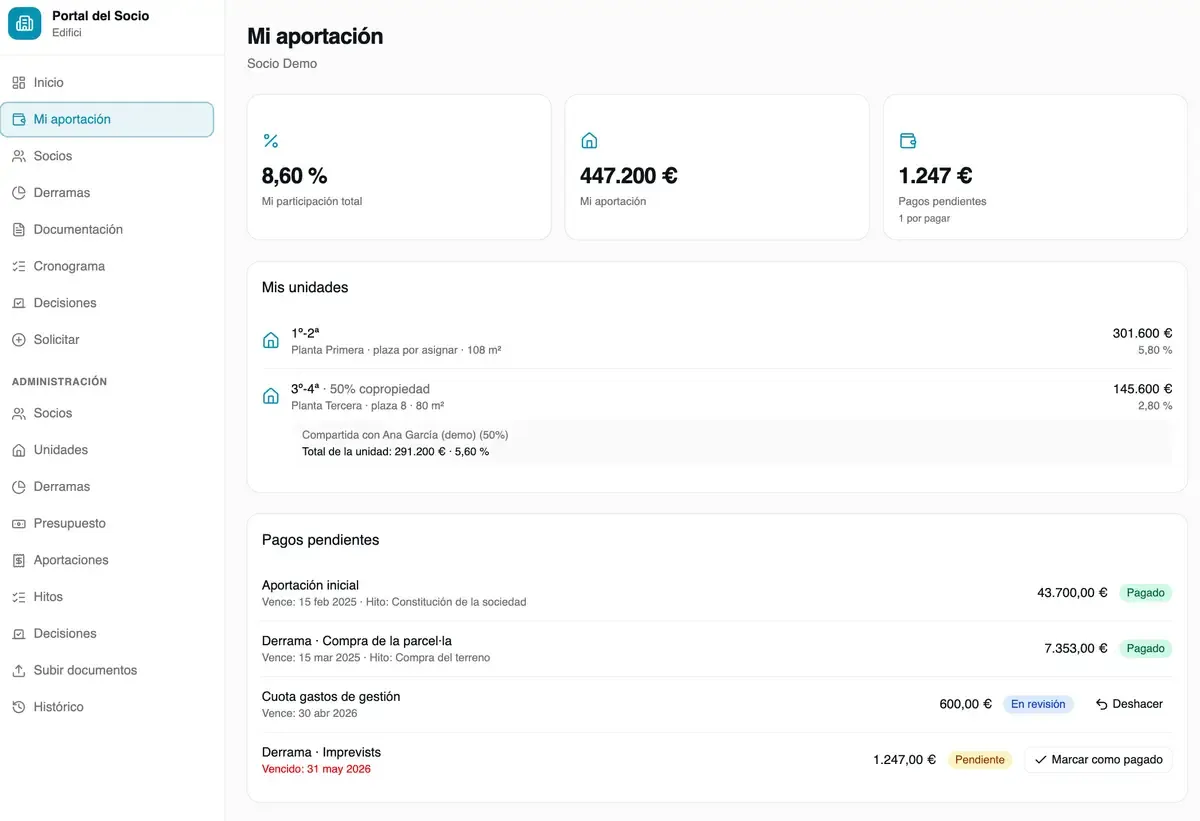
- Holdings and contributions in plain sight: every partner knows at any moment how much they have contributed and what percentage it represents, without asking by email.
- Clear outstanding payments and capital calls: capital calls are communicated and consulted in the portal, with their status kept up to date.
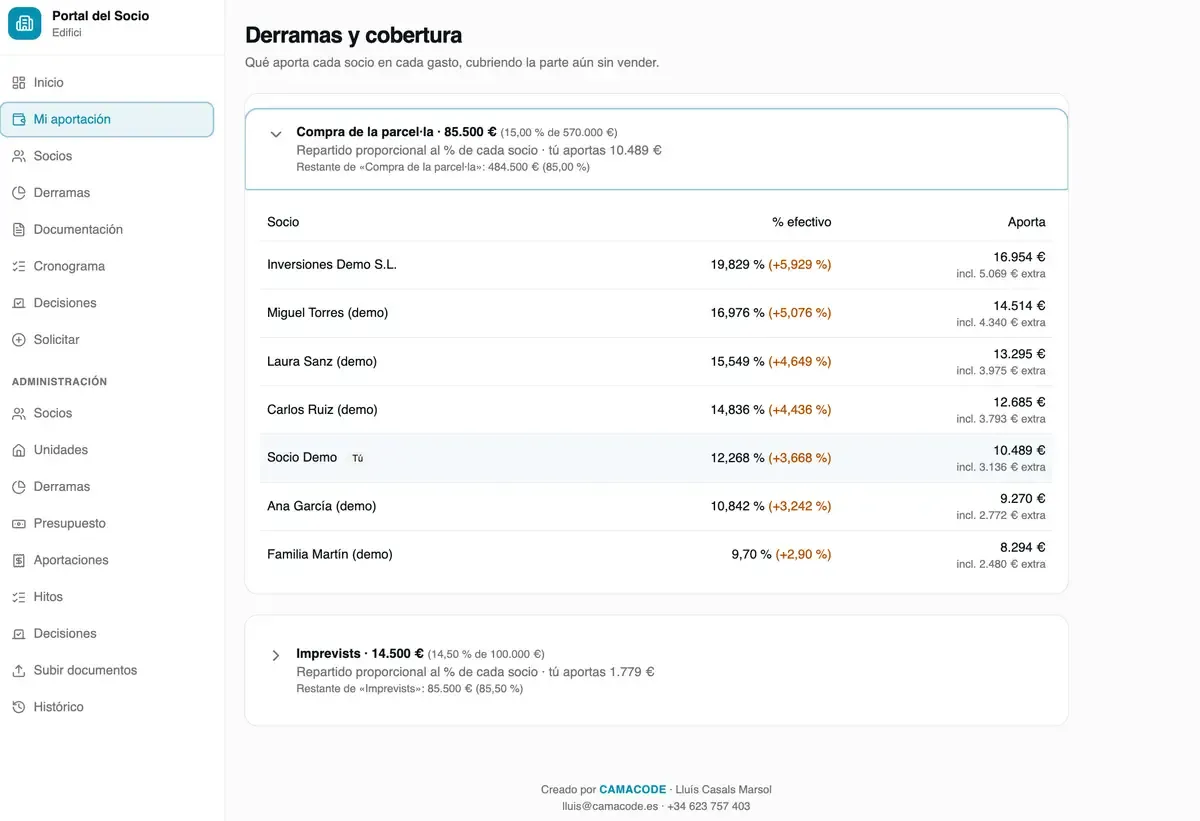
- Transparent split between partners: everyone sees the same view of the split, working from the same version of the data.
- Allocated and available units: which apartments are allocated and which are still free, with no parallel lists.
- Centralized documentation: contracts, minutes and project documents in one place, always the latest version.
- Milestone timeline: progress on the project is visible to everyone, without relying on informal summaries.
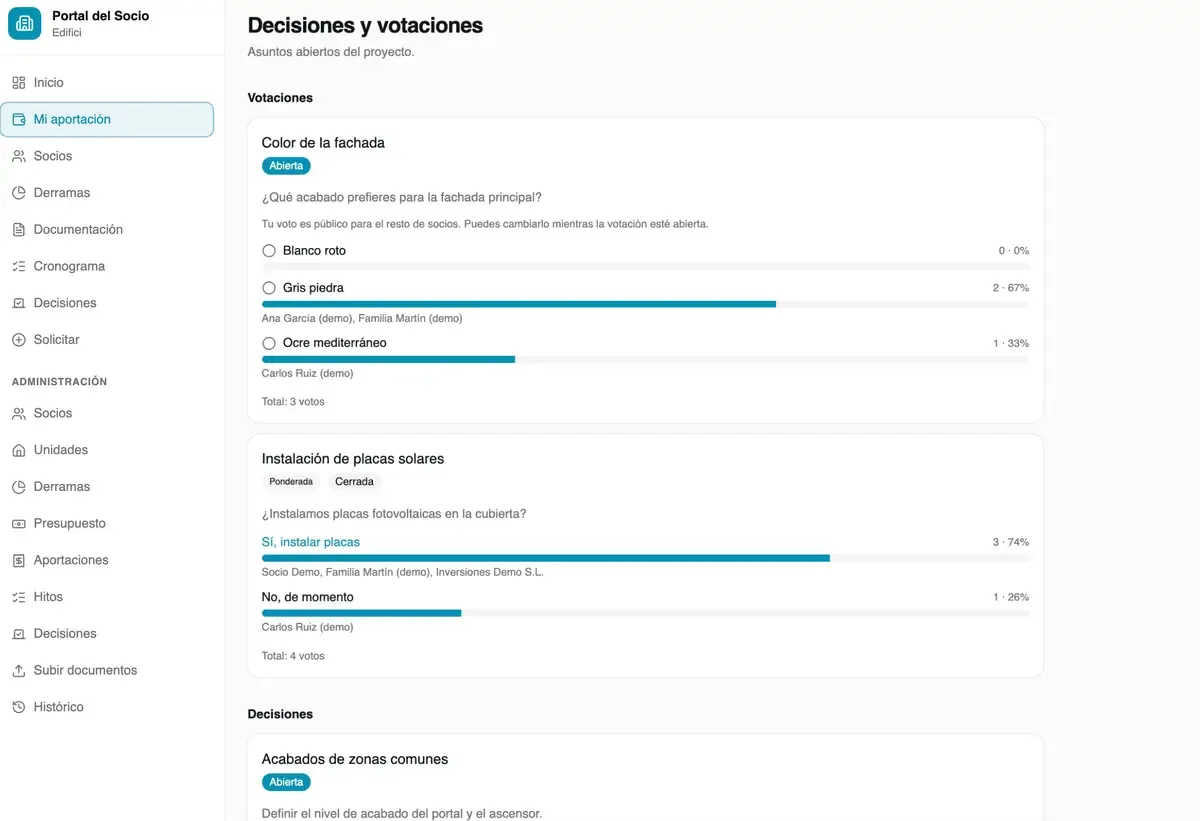
- Decisions and votes on record: what was decided, when and with what outcome, available to check at any time.
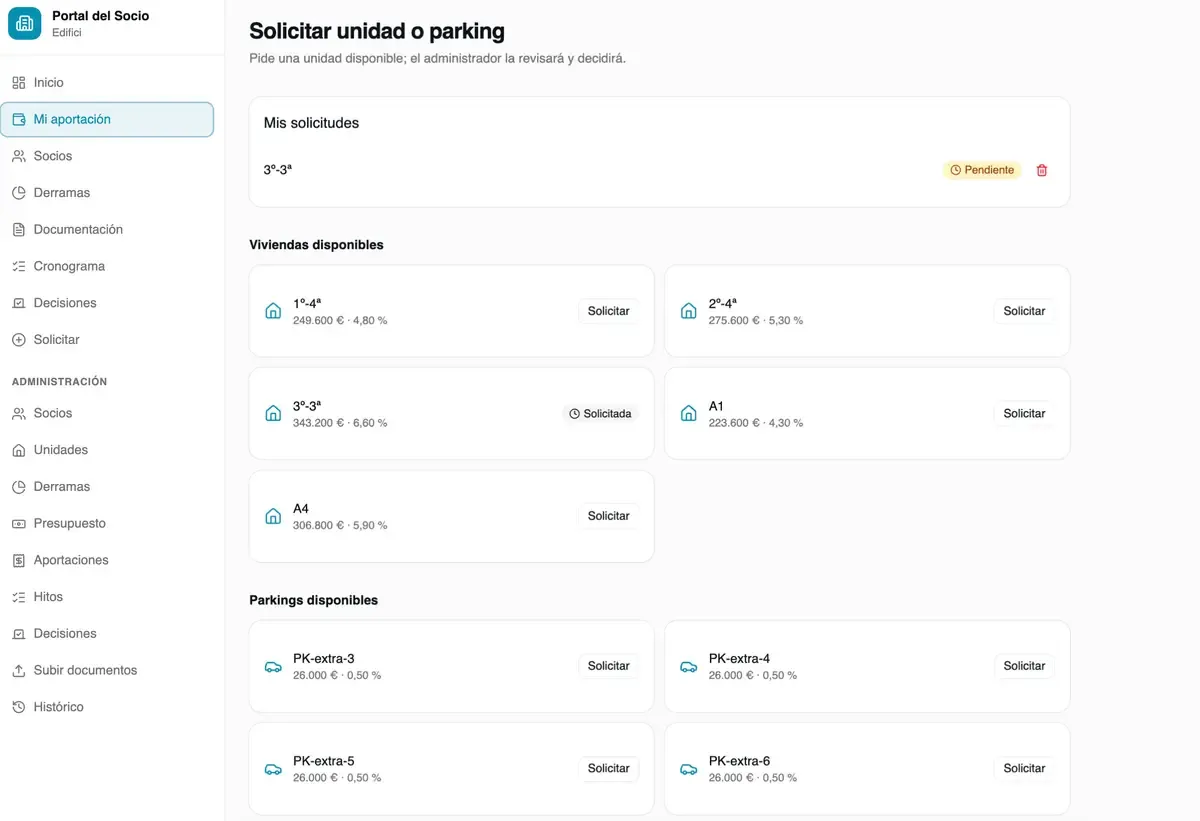
Transparency between investors is something you design
Transparency is not sending more PDFs or creating yet another WhatsApp group. When several people take part in a project, the information has to be clear, current and accessible; otherwise you get doubts, crossed wires and decisions based on different versions of reality. Who has paid? Which document is the latest one? What was voted on? What is still pending? A well-designed investor portal does not just store data: it makes sure everyone works from the same version of reality. Trust between partners is not held up by meetings and goodwill alone; it also depends on having systems that support it. In this project, that was the real goal: technology was the means, transparency was the result.
Results
No made-up figures: what changed was the way of working. The administrators stopped answering the same questions across different channels, because each investor checks their own information whenever they need it. Crossed wires went down, and so did the manual work of maintaining parallel spreadsheets. And decisions ended up documented in a place everyone recognizes as the official source. In a project involving several people’s money, that order is worth more than any single feature.
Do you have a similar process?
This pattern repeats far beyond real estate: investment groups, family businesses, boards, clubs or any project with several stakeholders and data scattered around. If your management lives between spreadsheets and messaging groups, this article may help: how to convert Excel to a web application.
Do you manage a project with several partners while the information lives scattered across Excel, WhatsApp and shared folders? Tell us how you work today and we will look together at whether an investor portal would make sense in your case.